Friday, October 06, 2006

Albrecht's Law: “Intelligent people, when assembled into an organization, will tend toward collective stupidity.” (1)

In the early morning hours of September 30, 1999, NASA’s Mars climate orbiter spacecraft, a $125 million marvel of engineering, designed to orbit Mars, suddenly disappeared from the screens of mission control and, seconds later, its signal vanished for ever. An investigation of this incident revealed that the NASA engineers who wrote the navigation software for the orbiter had been working in separate groups and had apparently not approached the mission as a whole. In fact, one group had been programming its calculations using metric units – kilometers and kilograms – while the other had been relying on American style English units – miles and pounds. That led to the critical flaw in the orbiter’s navigation. It inevitably burned to crisps due to friction with the atmosphere of Mars.

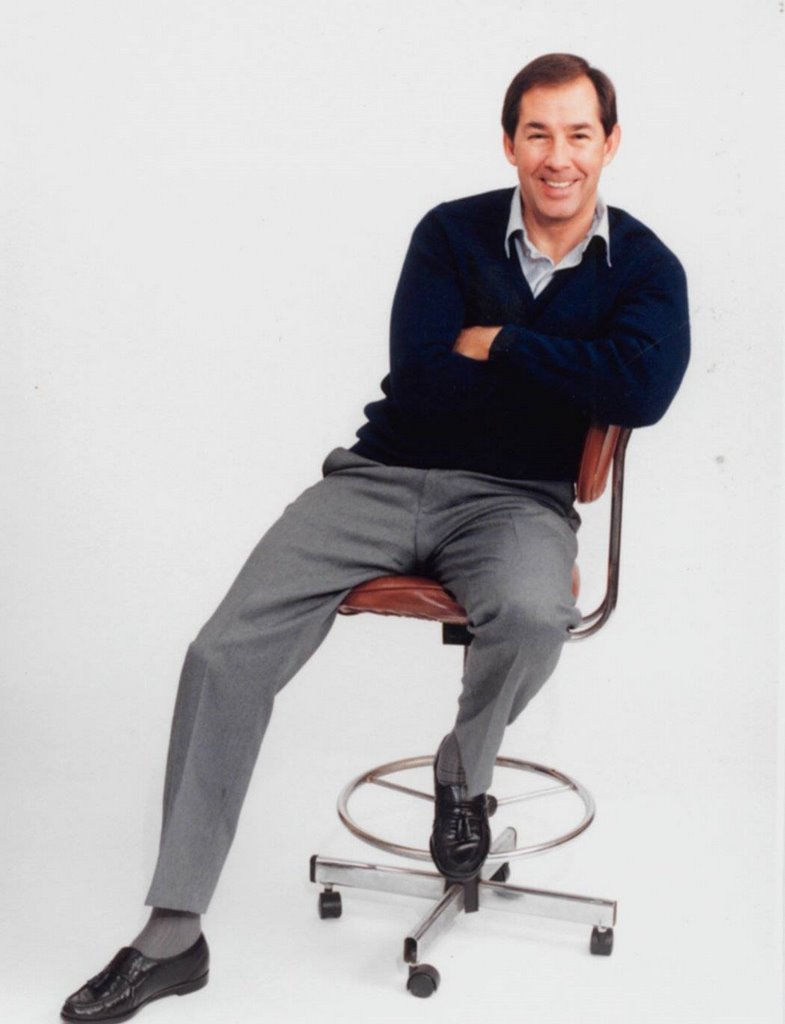
In his book “The Power of Minds at Work”, Karl Albrecht (picture) cites this case as an example for what is been known now as Albrecht’s law: “Intelligent people, when assembled into an organization, will tend toward collective stupidity.”

Arguing that in organizations, the sum of all individual minds only rarely equals the level of organizational intelligence, he identifies several factors that may contribute to this dysfunction. Based on more than 25 years’ experience as a consultant, Albrecht contends that organizational “entropy” (that is, the energy of a system that remains unavailable for conversion to work), ineffective decision-making processes, and cultural clashes arise in every organization. With employees working in separate departments, each department protecting its turf and often not knowing what the others are doing, “collective brain power gets wasted,” Albrecht says, thus compromising the mission of the enterprise. Collaboration and knowledge management, the two major buzzwords of today’s enterprise, may work on academic paper but are far from being effectively applied in practice.

Tuesday, October 03, 2006

Concepticide

So many managementtheories, so many managementconcepts. A Dutch PhD, Stefan Heusinkveld (2005) invented the word 'concepticide' to illustrate the risk of loosing valuable management knowledge by jumping from one concept to another. Managers tend to listen to guru's, consultants, agents, evangelists, colleagues and professors in search of the best possible management concept to help understand their business. Bringing management concepts to the market however has become a profitable business on its own. The concepts are marketed aggressively. There is no doubt that there is something valuable in every new born concept, helas by constantly switching concepts, a lot of knowledge becomes obsolete in the mind of the manager. A concept has a lifespan no longer than any other fashionable object. According to the research of the PhD managers are not capable of systematically enlarging their management knowledge base. Instead of building, layer upon layer, a formidable management 'knowledge castle', managers tend to reinvent the wheel over and over again... allowing mistakes to resurface, or rediscovering knowledge already available from the past.

Friday, September 29, 2006

He who builds a museum must truly be a leader.

My old professor in Sports History, Prof.Dr.R.Renson always dreamt of a professional Sports Museum. After years of hardship he finally succeeded in creating probably one of the most interesting museums in the Benelux. He who builds a museum from scratch must truly be a leader, and most certainly a people manager.
Truth is, it was not the collection nor one outstanding object that took me by surprise. It were...the toilets.


(Don't hesitate to visit the museum, Sportimonium, Hofstade, Belgium and especially the unique Flemish Folk Games Garden)(www.sportimonium.be)

Thursday, September 28, 2006

"Flanders fits you"

PMS CMYK RGB HEX RAL
Blauw 2945 100/45/0/14% 0/87/166 ID649F 5017
Paars 5135 47/64/28/0% 140/92/122 956E8E 4001
Oranje 153 0/46/100/18% 184/105/5 D18316 2000
Groen 356 95/0/100/27% 0/115/54 00853E 6010
Rood 704 0/90/72/29% 158/38/41 B42C33 3002
Geel 123 0/24/94/0% 252/201/23 FEC423 1004
Zwart Black 0/0/0/100% 0/0/0 000000 9005

What is this code?
This code is the new Flanders, the region in Belgium where I come from. The Government of Flanders decided to create a proper logo. Flemings can apply for the use of the logo in their own organisation, company or service. The figures above indicate the colorconfiguration of the logo for external printers. One sentence struck me when I read the press-kit. "The new logo is thus not the logo of the Flemish Government, but of Flanders, which is precisely why it can be used by any Flemish organisation or service for its own communication abroad.".
Baseline to go with the logo is in 4 languages: "Flanders fits you", "La Flandre vous va bien", "Flanderen passt zu dir", "Vlaanderen past je perfect".

Graphically speaking, the new logo is used as sub-logo, which means that it is subordinate to the logo of the relevant organisation or service itself. It is a qualitative label of origin, an “appellation d’origine”, which says: “This is from Flanders.”

Wednesday, September 27, 2006

End of 10 management lessons based on stories and jokes.

Looking at the mails I received regarding the "10 management lessons based on stories and jokes", it seems that these kind of lessons and parables are very popular amongst managers and leaders. Quite a few readers wrote they really learned something or at least had a good laugh with one of these 'management lessons'. Please keep sending your thoughts about the Impactroom blog!

Monday, September 25, 2006

Management Lesson 10/10 (India)

A man hunting tigers in India was suddenly surprised by a huge Bengal tiger - it was almost on top of him. The man raised his rifle and fired, but he overshot and missed. The tiger, frightened by the man and thrown off stride by the noise of the gun, leaped toward the hunter. But the leap was to wide, and he missed his prey.
The man returned to camp and spent several hours perfecting his aim for short distances and quick firing. On the following day, he again stalked the tiger. Finally, he spotted the beast at some distance. The tiger was practicing his short leaps.
Management lesson: Don' t think too soon you are ahead of your enemy/competitor.

Friday, September 22, 2006

Management Lesson 9/10

Several years ago, the founder of Wrigley Chewing Gum was on a flight from New York to his home in Chicago. The passenger in the next seat recognized the chewing gum tycoon and asked him a question. "Mr. Wrigley, I know your company enjoys over 90% of the chewing gum market. Yet, last week I read you are increasing your advertising budget by over 30%. With such a large share of the market, why do you continue to spend so much on advertising? Why not save that money or use it for something else?"
Mr. Wrigley replied, "How fast do you think this airplane is flying?" The man answered, "Oh, I guess about 600 miles per hour." Mr. Wrigley responded. "I think that's fast enough, don't you?" The man agreed that indeed, it was fast enough. "Well then," asked Mr. Wrigley, "why doesn't the pilot turn off the engines and save all that expensive jet fuel?"

Thursday, September 21, 2006

Management Lesson 8/10 - "Where to Place Them"

Does your organization struggle with the problem of properly fitting people to jobs? Here is a handy hint for ensuring success in job placement. Take the prospective employees you are trying to place and put them in a room with only a table and two chairs. Leave them alone for two hours, without any instruction. At the end of that time, go back and see what they are doing.
If they have taken the table apart, put them in Engineering.
If they are counting the butts in the ashtray, assign them to Finance.
If they are waving their arms and talking out loud, send them to Consulting.
If they are talking to the chairs, Personnel is a good spot for them.
If they are wearing green sunglasses and need a haircut, Computer Information Systems is their niche.
If the room has a sweaty odour, perhaps they're destined for the Help Desk.
If they mention what a good price we got for the table and chairs, put them into Purchasing.
If they mention that hardwood furniture DOES NOT come from rainforests, Public Relations would suit them well.
If they are sleeping, they are Management material.
If they are writing up the experience, send them to the Technical Documents team.
If they don't even look up when you enter the room, assign them to Security.
If they try to tell you it's not as bad as it looks, send them to Marketing.

Wednesday, September 20, 2006

Management Lesson 7/10

A man flying in a hot air balloon realized he was lost. Reducing altitude, he spotted a man on the ground and descended to shouting range.
"Excuse me," he shouted. "Can you help me? I promised my friend I would meet him a half hour ago, but I don't know where I am."
The man below responded: "Yes. You are in a hot air balloon, hovering approximately 30 feet above this field. You are between 40 and 42 degrees North Latitude, and between 58 and 60 degrees West Longitude."
"You must be an engineer," responded the balloonist.
"I am," the man replied. "How did you know?"
"Well," said the balloonist, "everything you have told me is technically correct, but I have no idea what to make of your information, and the fact is I am still lost."
Whereupon the man on the ground responded, "You must be a manager."
"That I am" replied the balloonist, "but how did you know?"
"Well," said the man, "you don't know where you are, or where you're going. You have made a promise which you have no idea how to keep, and you expect me to solve your problem. The fact is you are in the exact same position you were before we met, but now it is somehow my fault."

Friday, September 15, 2006

Management Lesson 5/10

A sales rep, an administration clerk and a manager are walking to lunch when they find an antique oil lamp. They rub it and a Genie comes out in a puff of smoke.
The Genie says, "I usually only grant three wishes, so I'll give each of you just one."
"Me first! Me first!" says the admin clerk "I want to be in the Bahamas, driving a speedboat, without a care in the world." Poof! She's gone.
In astonishment, "Me next! Me next!" says the sales rep. "I want to be in Hawaii, relaxing on the beach with my personal masseuse, an endless supply of pina coladas and the love of my life." Poof! He's gone.
"OK, you're up," the Genie says to the manager.
The manager says, "I want those two back in the office after lunch."
Management Lesson: Always let your boss have the first say.

Thursday, September 14, 2006

Management Lesson 4/10 (India)

A little bird was flying south for the winter. It was so cold, the bird froze and fell to the ground in a large field. While it was lying there, a cow came by and dropped some dung on it. As the frozen bird lay there in the pile of cow dung, it began to realize how warm it was. The dung was actually thawing him out! He lay there all warm and happy and soon began whistling from pleasure. A passing cat heard the bird singing and came to investigate. Following the sound, the cat discovered the bird under the pile of cow dung and promptly dug him out and ate him!
Management Lesson:
1) Not everyone who drops s**t on you is your enemy.
2) Not everyone who gets you out of s**t is your friend.
3) When you're in deep s**t, keep your mouth shut!

Wednesday, September 13, 2006

Management Lesson 3/10

When the body was first made, all the parts wanted to be 'Boss'. The brain said, "I should be Boss because I control the whole body's responses and functions." The feet said, "We should be Boss as we carry the brain around and get him to where he wants to go." The hands said, "We should be the Boss because we do all the work and earn all the money."And so it went on and on with the heart, the lungs and the eyes until finally the a**hole spoke up. All the parts laughed at the idea of the a**hole being the Boss. So the a**hole went on strike, blocked itself up and refused to work. Within a short time the eyes became crossed, the hands clenched, the feet twitched, the heart and lungs began to panic and the brain fevered. Eventually they all decided that the a**hole should be the Boss, and so the motion was passed. All the other parts did all the work while the Boss just sat and passed out the s**t!
Management Lesson: You don't need brains to be a Boss - any a**hole will do.

Tuesday, September 12, 2006

Management Lesson 2/10 (India)

A turkey was chatting with a bull. "I would love to be able to get to the top of that tree," sighed the turkey, "but I haven't got the energy. "Well, why don't you nibble on some of my droppings?" replied the bull. They're packed with nutrients." The turkey pecked at a lump of dung and found that it actually gave him enough strength to reach the first branch of the tree. The next day, after eating some more dung, he reached the second branch. Finally after a fortnight, there he was proudly perched at the top of the tree. Soon the turkey was spotted by a farmer, who shot the turkey out of the tree.
Management Lesson: Bulls**t might get you to the top, but it won't keep you there.

Monday, September 11, 2006

Management Lesson 1/10 (India)

A crow was sitting on a tree, doing nothing all day. A small rabbit saw the crow, and asked him, "Can I also sit like you and do nothing all day long?" The crow answered: "Sure, why not." So, the rabbit sat on the ground below the crow, and rested. All of a sudden, a fox appeared, jumped on the rabbit and ate it.
Management Lesson: To be sitting and doing nothing, you must be sitting very high up.

Thursday, September 07, 2006

10 Rules To Manage Knowledge Workers

Late last year Eric Schmidt and Hal Varian published in Newsweek 10 Golden Rules that Google has implemented to help effectively manage knowledge workers.

1. Hire by committee
2. Cater to their every need
3. Pack them in
4. Make coordination easy
5. Eat your own dog food
6. Encourage creativity
7. Strive to reach consensus
8. Don’t be evil
9. Data drive decisions
10. Communicate effectively

As they mention in the article non of these items are new, nor are they really that revolutionary. The success of the items seems to be directly related to the way they are implemented.

Wednesday, September 06, 2006

Mostly Business

Every day at the end of the page (scroll down) there will be a daily business cartoon from Ted Goff.


Safety cartoons for newsletters training presentations Business cartoons Computer Sales Quality Management Financial cartoons Intranet

Monday, September 04, 2006

Colin Powell: Leadership Lesson 20/20: "The Art of Leadership"


“Leadership is the art of accomplishing more than the science of management says is possible.”

Friday, September 01, 2006

Colin Powell: Leadership Lesson 19/20: "Command is lonely"

Harry Truman was right. Whether you're a CEO or the temporary head of a project team, the buck stops here. You can encourage participative management and bottom-up employee involvement, but ultimately the essence of leadership is the willingness to make the tough, unambiguous choices that will have an impact on the fate of the organization. I've seen too many non-leaders flinch from this responsibility. Even as you create an informal, open, collaborative corporate culture, prepare to be lonely.

Tuesday, August 15, 2006

Colin Powell: Leadership Lesson 18/20: "Have fun in your command..."


"Have fun in your command. Don't always run at a breakneck pace. Take leave when you've earned it: Spend time with your families. Corollary: surround yourself with people who take their work seriously, but not themselves, those who work hard and play hard."

Herb Kelleher of Southwest Air and Anita Roddick of The Body Shop would agree: seek people who have some balance in their lives, who are fun to hang out with, who like to laugh (at themselves, too) and who have some non-job priorities which they approach with the same passion that they do their work. Spare me the grim workaholic or the pompous pretentious "professional;” I'll help them find jobs with my competitor.

Friday, August 11, 2006

Colin Powell: Leadership Lesson 17/20: "The commander in the field is always right..."


"The commander in the field is always right and the rear echelon is wrong, unless proved otherwise."

Too often, the reverse defines corporate culture. This is one of the main reasons why leaders like Ken Iverson of Nucor Steel, Percy Barnevik of Asea Brown Boveri, and Richard Branson of Virgin have kept their corporate staffs to a bare-bones minimum - how about fewer than 100 central corporate staffers for global $30 billion-plus ABB? Or around 25 and 3 for multi-billion Nucor and Virgin, respectively? Shift the power and the financial accountability to the folks who are bringing in the beans, not the ones who are counting or analyzing them.

Thursday, August 10, 2006

Colin Powell: Leadership Lesson 16/20: "P=40 to 70"


"Powell's Rules for Picking People:"
Part I: "Use the formula P=40 to 70, in which P stands for the probability of success and the numbers indicate the percentage of information acquired.”
Part II: "Once the information is in the 40 to 70 range, go with your gut."

Don't take action if you have only enough information to give you less than a 40 percent chance of being right, but don't wait until you have enough facts to be 100 percent sure, because by then it is almost always too late. Today, excessive delays in the name of information-gathering breeds "analysis paralysis." Procrastination in the name of reducing risk actually increases risk.

Monday, August 07, 2006

Colin Powell: Leadership Lesson 15/20: "The KISS Principle"


"Great leaders are almost always great simplifiers, who can cut through argument, debate and doubt, to offer a solution everybody can understand."

Effective leaders understand the KISS principle, Keep It Simple, Stupid. They articulate vivid, over-arching goals and values, which they use to drive daily behaviors and choices among competing alternatives. Their visions and priorities are lean and compelling, not cluttered and buzzword-laden. Their decisions are crisp and clear, not tentative and ambiguous. They convey an unwavering firmness and consistency in their actions, aligned with the picture of the future they paint. The result: clarity of purpose, credibility of leadership, and integrity in organization.

Saturday, August 05, 2006

Colin Powell: Leadership Lesson 14/20: "Powell's Rules for Picking People"


"Powell's Rules for Picking People:"

Look for intelligence and judgment, and most critically, a capacity to anticipate, to see around corners. Also look for loyalty, integrity, a high energy drive, a balanced ego, and the drive to get things done.

How often do our recruitment and hiring processes tap into these attributes? More often than not, we ignore them in favor of length of resume, degrees and prior titles. A string of job descriptions a recruit held yesterday seem to be more important than who one is today, what they can contribute tomorrow, or how well their values mesh with those of the organization. You can train a bright, willing novice in the fundamentals of your business fairly readily, but it's a lot harder to train someone to have integrity, judgment, energy, balance, and the drive to get things done. Good leaders stack the deck in their favor right in the recruitment phase.

Friday, August 04, 2006

How to become a good manager 1

First concentrate on finding the right environment. Check job opportunity at Discovery Channel for example. See side bar or go to http://www.jobsformanagers.blogspot.com

Colin Powell: Leadership Lesson 13/20: "Perpetual optimism..."


"Perpetual optimism is a force multiplier."

The ripple effect of a leader's enthusiasm and optimism is awesome. So is the impact of cynicism and pessimism. Leaders who whine and blame engender those same behaviors among their colleagues. I am not talking about stoically accepting organizational stupidity and performance incompetence with a "what, me worry?" smile. I am talking about a gung-ho attitude that says "we can change things here, we can achieve awesome goals, we can be the best." Spare me the grim litany of the "realist," give me the unrealistic aspirations of the optimist any day.

Wednesday, August 02, 2006

Colin Powell: Leadership Lesson 12/20: "Fit no stereotypes..."


"Fit no stereotypes. Don't chase the latest management fads. The situation dictates which approach best accomplishes the team's mission."

Flitting from fad to fad creates team confusion, reduces the leader's credibility, and drains organizational coffers. Blindly following a particular fad generates rigidity in thought and action. Sometimes speed to market is more important than total quality. Sometimes an unapologetic directive is more appropriate than participatory discussion. Some situations require the leader to hover closely; others require long, loose leashes. Leaders honor their core values, but they are flexible in how they execute them. They understand that management techniques are not magic mantras but simply tools to be reached for at the right times.

Monday, July 31, 2006

Colin Powell: Leadership Lesson 10: "About ego's"


"Never let your ego get so close to your position that when your position goes, your ego goes with it."

Too often, change is stifled by people who cling to familiar turfs and job descriptions. One reason that even large organizations wither is that managers won't challenge old, comfortable ways of doing things. But real leaders understand that, nowadays, every one of our jobs is becoming obsolete. The proper response is to obsolete our activities before someone else does. Effective leaders create a climate where people’s worth is determined by their willingness to learn new skills and grab new responsibilities, thus perpetually reinventing their jobs. The most important question in performance evaluation becomes not, "How well did you perform your job since the last time we met?" but, "How much did you change it?"

Sunday, July 30, 2006

Colin Powell: Leadership Lesson 9: "Organization charts and fancy titles count for next to nothing."


Organization charts are frozen, anachronistic photos in a work place that ought to be as dynamic as the external environment around you. If people really followed organization charts, companies would collapse. In well-run organizations, titles are also pretty meaningless. At best, they advertise some authority, an official status conferring the ability to give orders and induce obedience. But titles mean little in terms of real power, which is the capacity to influence and inspire. Have you ever noticed that people will personally commit to certain individuals who on paper (or on the organization chart) possess little authority, but instead possess pizzazz, drive, expertise, and genuine caring for teammates and products? On the flip side, non-leaders in management may be formally anointed with all the perks and frills associated with high positions, but they have little influence on others, apart from their ability to extract minimal compliance to minimal standards.

Wednesday, July 26, 2006

Colin Powell: Leadership Lesson 8: "Only by attracting the best people will you accomplish great deeds."


"Organization doesn't really accomplish anything. Plans
don't accomplish anything, either. Theories of management don't much matter. Endeavors succeed or fail because of the people involved. Only by attracting the best people will you accomplish great deeds."


In a brain-based economy, your best assets are people. We've heard this expression so often that it's become trite. But how many leaders really "walk the talk" with this stuff? Too often, people are assumed to be empty chess
pieces to be moved around by grand viziers, which may explain why so many top managers immerse their calendar time in deal making, restructuring and the latest management fad. How many immerse themselves in the goal of creating an environment where the best, the brightest, the most creative are attracted, retained and, most importantly, unleashed?

Tuesday, July 25, 2006

Colin Powell: Leadership Lesson 7

"Keep looking below surface appearances. Don't shrink from doing so (just) because you might not like what you find."

"If it ain't broke, don't fix it" is the slogan of the complacent, the arrogant or the scared. It's an excuse for inaction, a call to non-arms. It's a mind-set that assumes (or hopes) that today's realities will continue tomorrow in a tidy, linear and predictable fashion. Pure fantasy. In this sort of culture, you won't find people who pro-actively take steps to solve problems as they emerge. Here's a little tip: don't invest in these companies.

Sunday, July 23, 2006

Colin Powell: Leadership Lesson 6: "You don't know what you can get away with until you try."


You know the expression, "it's easier to get forgiveness than permission." Well, it's true. Good leaders don't wait for official blessing to try things out. They're prudent, not reckless. But they also realize a fact of life in most organizations: if you ask enough people for permission, you'll inevitably come up against someone who believes his job is to say "no." So the moral is, don't ask. Less
effective middle managers endorsed the sentiment, "If I haven't explicitly been told 'yes,' I can't do it," whereas the good ones believed, "If I haven't explicitly
been told 'no,' I can." There's a world of difference between these two points of view.

Wednesday, July 19, 2006

Colin Powell: Leadership Lesson 5: "Never neglect details."

"Never neglect details. When everyone's mind is dulled or distracted the leader must be doubly vigilant."


Strategy equals execution. All the great ideas and visions in the world are worthless if they can't be implemented rapidly and efficiently. Good leaders delegate and empower others liberally, but they pay attention to details, every day. (Think about supreme athletic coaches like Jimmy Johnson, Pat Riley and Tony La Russa). Bad ones, even those who fancy themselves as progressive "visionaries," think they're somehow "above" operational details. Paradoxically, good leaders understand something else: an obsessive routine in carrying out the details begets conformity and complacency, which in turn dulls everyone's mind. That is why even as they pay attention to details, they continually encourage people to challenge the process. They implicitly understand the sentiment of CEO leaders like Quad Graphic's Harry Quadracchi, Oticon's Lars Kolind and the late Bill McGowan of MCI, who all independently asserted that the Job of a leader is not to be the chief organizer, but the chief dis-organizer.

Tuesday, July 18, 2006

Colin Powell: Leadership Lesson 4: "Don't be afraid to challenge the pros."


"Don't be afraid to challenge the pros, even in their own backyard."

Learn from the pros, observe them, seek them out as mentors and partners. But remember that even the pros may have leveled out in terms of their learning and skills. Sometimes even the pros can become complacent and lazy. Leadership does not emerge from blind obedience to anyone. Xerox's Barry Rand was right on target when he warned his people that if you have a yes-man working for you, one of you is redundant. Good leadership encourages everyone's evolution.

Monday, July 17, 2006

Colin Powell: Leadership Lesson 3

"Don't be buffaloed by experts and elites. Experts often possess more data than judgment. Elites can become so inbred that they produce hemophiliacs who bleed to death as soon as they are nicked by the real world."

Small companies and start-ups don't have the time for analytically detached experts. They don't have the money to subsidize lofty elites, either. The president answers the phone and drives the truck when necessary; everyone on the payroll visibly produces and contributes to bottom-line results or they're history. But as companies get bigger, they often forget who "brought them to the dance": things like all-hands involvement, egalitarianism, informality, market intimacy, daring, risk, speed, agility. Policies that emanate from ivory towers often have an adverse impact on the people out in the field who are fighting the wars or bringing in the revenues. Real leaders are vigilant, and combative, in the face of these trends.

Friday, July 14, 2006

Colin Powell: Leadership Lesson 2

"The day soldiers stop bringing you their problems is the day you have stopped leading them. They have either lost confidence that you can help them or concluded that you do not care. Either case is a failure of leadership."

If this were a litmus test, the majority of CEO's would fail. One, they build so many barriers to upward communication that the very idea of someone lower in the hierarchy looking up to the leader for help is ludicrous. Two, the
corporate culture they foster often defines asking for help as weakness or failure, so people cover up their gaps, and the organization suffers accordingly. Real leaders make themselves accessible and available. They show concern for the efforts and challenges faced by underlings, even as they demand high standards. Accordingly, they are more likely to create an environment where problem analysis replaces blame.

Tuesday, July 11, 2006

Colin Powell: Leadership Lesson 1: "Being responsible sometimes means pissing people off."

Good leadership involves responsibility to the welfare of the group, which means that some people will get angry at your actions and decisions. It's inevitable, if you're honorable. Trying to get everyone to like you is a sign of mediocrity: you'll avoid the tough decisions, you'll avoid confronting the people who need to be confronted, and you'll avoid offering differential rewards based on differential performance because some people might get upset. Ironically, by procrastinating on the difficult choices, by trying
not to get anyone mad, and by treating everyone equally "nicely" regardless of their contributions, you'll simply ensure that the only people you'll wind up angering are the most creative and productive people in the organization.

Friday, July 07, 2006

Reverse Marketing

October 27, 2005. The biggest newspaper in the US, the USA Today, unscrupulously attempts to demonize Condoleezza Rice by photoshopping her picture. After some insiders leak the attempt to the outside world the altered photo was quickly removed.

Wednesday, June 28, 2006

Augustus septem horas dormiebat.

A former minister of the Belgium government told me this morning he lives by the adagium: "Augustus septem horas dormiebat". A sentence he remembers from his high school years. "The emperor Augustus always slept 7 hours."

In high school they used the sentence to teach the Latin case of the accusative. However it's a wise thought on its own. How many managers sleep 7 hours a night these days?

Monday, June 26, 2006

Thinking Out of the Box

"Right now we are raising a generation of kids in the US who cannot think inside, on top of, under, or outside the box. And unless we smarten them up soon, this generation D (Dumbest Americans) is going to compromise our country's (US) ability to compete economically somewehere down the road."
(Robert A Lutz in 'Guts')

Evolution of a Student Homework Assignment in the US
1960: A logger sells a truckload of lumber for $100. His cost of production is four-fifths of this price. What is his profit ?
1970: A logger sells a truckload of lumber for $100. His cost of production is four-fifhts of this price, or $80. What is his profit ?
1975 (new math): A logger exchanges a set L of lumber for a set M of money. The cardinality of set M is $100, and each element is worth $1. Make 100 dots representing the elements of the set M. The set C of the costs of production contains 20 fewer points than set M. Represent the set C as a subset of M, and answer the following question: What is the cardinality of the set P of points ?
1980: A logger sells a truckload of wood for $100. His cost of production is $80, and his profit is $20. Your assigment: Underline the number 20.
1990 (outcome-based education): By cutting down beautiful forest trees, a logger makes $20. What do you think of this way of making a living ? (Topic for class participation: How did the forest birds and squirrels feel?)

(Source: Echoes -winter 1994-, Rose-Hulman Institute of Technololgy, Terre Haute, Indiana)

Friday, June 23, 2006

Leadership is physical. Tips to stay ahead in the office.

1. Stand up
Sitting down all day will restrict blood flow causing lower energy levels. Force yourself to stand up more during the day. Walk or stand while you are on the phone. Shift weight from foot to foot from time to time, bend through the knees, tiptoe while you smile at your colleagues.

2. Rub your ear
An old Chinese technique, massage the ear, the ear represents our entire body. Rub the complete ear for 1 minute untill it gets warm. That is a sign that the blood is circulating through your complete body.

3. Think Popeye - Take in iron
Iron transports oxygen in the bloodstream. About one fifth of the Western European managers have an iron deficit. Eat more red meat, vegetables, cereals, spinach and beans for an iron boost.

4. Water
Drink at least 1,5 litres of water a day. Managers who don't drink enough tend to loose concentration, have a lowered immunity system, and get more irritated. Airco, stress and central heating tend to cause water loss in the human body.

5. Think Bull
Psychologists advise to wear more red on the job. It tends to stimulate you. Wearing basic colours also will add to your image in a positive way. It will show you feel strong, confident and positive.

6. Blink Blink Blink
Energy levels go down when your eyes are tired. Your eyes get tired from staring at a computer screen. Reading a screen will cause your eyes to blink less, making them dry and tired. So blink, blink!

7. Work on your posture
15 minutes reading or typing in the wrong position will lower your energy levels significantly. It compresses the internal organs leading to weak or uneasy digestion. Take a break every 20 minutes. Pull your shoulders back, pull your stomach in, stick your chin in the air.

8. Attend breathing class
Most managers actually do not breath the correct way. Good breathing doesn't come from inhaling air via chest movement. It comes from moving the diaphragm under the chestcavity. It is your belly that moves instead of your chest.Good exercise to learn good breathing: inhale through the nose (mouth closed) for four slow counts, hold your breath for 1 count, exhale through the nose for six counts. Do this a couple of minutes every hour.

Tuesday, June 20, 2006

Salaries top 10 CEO's listed companies

The 5 best paid CEO’s from the Forbes listing 2005 earned the bulk of their income by exercising their stock options. The average raise increase for top CEO’s compared to 2004 was 6%. 2004 was a better year because the average increase compared to 2003 was 54 %!

Friday, June 16, 2006

Management Jobs - Jobs for Managers

Impactroom will start publishing management job openings. For the moment the jobs are listed in the sidebar. In the beginning the jobs will be quite local (Benelux-Europe), gradually they will become more international. The jobs are also posted at: http://www.jobsformanagers.blogspot.com. Success!

Tuesday, June 13, 2006

Management by sports


An advertising campaign for WSJE targeted to retail stores in the Middle East during the 2006 Football World Championship.

I do not entirely agree with the slogan from the first poster.
It is a fact that in the US a lot of topsport coaches and managers of sports clubs have the same status as some managementguru's.
Think of well renowned baseball coaches or managers as Connie Mack, Joe Torre, Dusty Baker, Earl Weaver or Doug Melvin. Whatever they did on the field with their respective teams was transferred to herds of lesson seeking managers and leaders in the corporate business world. They all became part of the management industry, selling books, giving speeches, exploring the transfer of ideas and principles from the world of sports to the world of business. In Europe, that is also a fact, we are no way near implementing sportsbased management knowledge into the business world. Although football is the number one sport in Europe, football trainers haven't found their way yet to the management forums. Or vice versa, corporate managers haven't understood yet what valuable lessons are to be learned from the psycho-dynamics one can find in a typical sports environment. So in fact the WSJE add is partly right.

10 management tips from Paul Van Himst

1. Keep it simple.
2. Work hard. Always.
3. Focus.
4. Use family to build relationships you can trust in your company.
5. Enjoy! Enjoy whatever you do.
6. Stay present in your market to continuously build expertise.
7. Build a network based on personal contacts.
8. Never abandon a client, even when he is in trouble.
9. Learn from your mistakes, learn from topsportmanagers.
10. Be disciplined, listen to others.

Paul Van Himst was a successful soccerplayer and national footballcoach for Belgium from 1991 till 1996. While playing and working at the highest level in football he was involved in a coffee company called Bresor. He took over the company in 1990. In 2006 the company will celebrate his 46st year in business. Turnover for Bresor is ca 2 million Euro, it has 15 employees (amongst them his son and daughter).
Paul Van Himst thinks Brazil will win the WorldChampionship Football in Germany.

Pictures:
Top: Van Himst starts playing at Anderlecht at the age of 16
Middle: Van Himst as National football coach training the 'Red Devils' (De Rode Duivels)
Bottom: Van Himst at his coffee company Bresor
(10 tips copyright KMO Business)

Monday, June 12, 2006

"Turn your employees into partners of gold."

A remarkable advertising campaign of a Belgian Health Insurance Fund also providing Payroll Management and HR support to Belgian companies. "Turn your employees into partners of gold."

It is an interesting message knowing that in 2000 1,34 % of the total amount companies spent on wages was going to training and education of employees. In 2004 this number decreased to 1,03 %. In 2006 the number is not known yet but is expected to drop below the 1 % margin. This means Belgian companies are spending less money to educate their employees.

Wednesday, June 07, 2006

Order a castle. And you'll receive photobook. Management of ideas.

A neighbour organised a party for the birthday of his daughter of 5. He ordered a jumpcastle online. At the correct day a van pulled up his driveway, a castle was unloaded and installed in his garden. He realised afterwards he didn't even know where the van came from or where the castle company was located.

Much to his surprise he received a digital camera to go with the castle. The driver told him that he could use the camera during the party. After the party they would take the camera to the office again and put all the pictures on a secluded photobook on the companies website. The driver handed out a bundle of leaflets, mentioning a code to enter the photobook.

The neighbour gave all the parents picking up their child such a leaflet. When visiting the photobook it turns out you can not only see your child having fun at the jumpcastle, you even can order a printed version of the pictures to be send to you. How smart is all this ? The marketing of hiring jumpcastles is clearly technology driven these days.

I am planning a birthday party myself, the jumpcastle business was completley strange to me...untill I looked for the photobook of the children at the party. Guess where I probably will order a jumpcastle ? And even I still do not know where the jumpcastle company is located.

Saturday, June 03, 2006

Lutz's Laws. The 7 laws of business that made Chrysler the world's hottest car company. (Once)

1. The customer isn't always right.
2. The primary purpose of business is not to make money.
3. When everybody else is doing it, don't!
4. Too much quality can ruin you.
5. Financial controls are bad.
6. Disruptive people are an asset.
7. Teamwork isn't always good.

Robert A. Lutz, former President and Vice Chairman of Chrysler Corporation.

(...My family finally settled down for good in Zurich following World War 2, and I managed to get myself booted out of high school. Official reason:"Academic and disciplinary problems." Luckily for me, six months of manual labor in a leather warehouse taught me that maybe buckling down in school wasn't such a bad idea after all. But my father, in his infinite wisdom, wasn't going to let me off with just that. In exchange for his promise to fund one more chance for me at education (at a public school in French-speaking Lausanne, Switzerland), he made me promise to return to the United States immediately upon graduation and enlist in the U.S.Marine Corps. At the time, I thought my father's deal might be a Faustian pact- especially since the Korean War was in full swing...
.... I loved the Corps, and I loved what it did for me in turning around my life.)

(from "Guts" Robert A. Lutz, 1998)

Friday, June 02, 2006

For managers who work with printproducts, there is now http://www.printplatform.blogspot.com

For managers who become involved with printproducts in their career there is now the Print Platform blog. It is a blog for non-print-specialists explaining techniques and print strategies. It also gives an idea of what happens in the major printplants in Europe. The blog was especially created to give first line managers more insight in printtechniques. It is at the same time an educational tool for assistants and supervisors whose responsibilities would extend to follow up on everything what an average company is obliged to print these days.
http://www.printplatform.blogspot.com

Thursday, June 01, 2006

The MBA-Menace (Mintzberg)

"Coventional MBA-programs train the wrong people in the wrong way with the wrong consequences. They ignore the extent to which management is a craft, requiring zest and intuition rather than merely an ability to analyse data and invent strategies."

Maybe that is why, as Mintzberg gleefully points out, a list of America's most admired business leaders (Warren Buffet, Herb Kelleher, Michael Dell, Bill Gates, Jack Welch and Oprah Winfrey) contains not a single MBA. (The Economist, 2004)

(Picture: Henry Mintzberg)

Tuesday, May 30, 2006

Don't. Throw. Books. Away.

It was standing still and quite in the corner of a small WSJE kitchen. I don't know why or how but when I passed the dumpster with a cup of capucino I noticed what I thought were books under the cardboard boxes. I removed the cardboard and yes, somebody must have taken the decision to unload part of his or her library.

This one book "I'd like the world to buy a coke" was staring me in the face. I wouldn't dare to criticize journalists or editors (the books must have come from the newsdepartment) but my hart bleeds when I see books being thrown away, even when I know they are bad or completely outdated. I couldn't help myself and saved at least 20 books after I read the backcover of the Coca Cola book. It said:

"... Although Goizueta -former CEO of Coca Cola- was described as formal, courtly and gentlemanly, his management practices have been nicknamed the 'Spanish Inquisition' for his interrogations of international managers. Whatever his quirks, his leadership saw Coke mushroom into an enormously profitable $18 billion enterprise. ..."

It made me wonder what the 'Spanish Inquisition' leadership style was all about. It made me save the book aswell as 19 others.

If readers of this blog would also like to trim down their library because they think 'print is dead', please send me a note so I can rescue at least all your managementbooks.

Monday, May 22, 2006

Mothers are topmanagers, but ...

It is obvious from the title of this blog I believe in the management capacities of mothers. A lot is to be learned from the way mothers handle children, organize their home or structure their day.

In Europe a reverse political correct climate towards women is surfacing. Political parties are obliged to fill their ranks with a fixed percentage of women (Belgium, Germany, ...). Local governments force themselves to include a fixed percentage of women (Austria, ...).

In Germany on the highway from Koln to Brussels at a usually very busy 'Rasthof' (gasoline station with restaurant alongside the highway) the following sign was erected, see picture.

The signs says:
"Parkingspot for Women.
Please keep 3 spots open."

Thursday, May 18, 2006

The 525-Rule

The '525' rule says that 25 per cent of a company's sales revenue should accrue from products launched during the last 5 years.

This rule was invented by Sumantra Ghoshal, a Strategic and International Management Professor at the London Business School. Ghoshal was also the founding Dean of the Indian School of Business in Hyderabad. He held doctoral degrees in management from MIT and Harvard. The Economist described him once as the 'Euroguru'. (He died March 2004.)

Tuesday, May 16, 2006

Sun Tzu - The Art of War - Is Business War ?

Troops in desperate straits
Know no fear.
Where there is no escape,
They stand firm;
When they have entered deep,
They persist;
When they see no hope,

They fight.

They are alert
Without needing
Discipline;


They act
Without needing
Instructions;


They are devoted
Without needing
A compact;


They are loyal
Without needing
Orders.


Sun Tzu, ca 6th century BC was the author of The Art of War, an ancient Chinese book on military strategy. Research however suggested at some point that Sun Tzu's work was actually authored by unknown Chinese philosophers and that Sun Tzu did not actually exist as a historical figure. Many of the ideas from The Art of War were translated to typical business environments in more modern times.
(On the war of business, see blog to come, when tackling the television show 'The Topmanager'.)

Friday, May 12, 2006

Nightmare for operations managers - information gaps are worse than fire.

Fire! It happened last week to The Wall Street Journal Europe. A warehouse of Sabena Technics at the Brussels airport caught fire during the night. Nothing to do with us. Only one problem, the fire blocked the road towards one of our destinations, the DHL hub at the airport.

Whatever emergency procedure you have, you need time to deploy it. In this case there was no time to save the situation. Our products were in the trucks, the trucks were blocked a few 100 meters from their destination. What do you do ? What can you do ? Do you know uberhaupt there is a problem ? We didn't. Unfortunately. It was only in the morning we found out our products hadn't left the country. Somewhere along the line there had been an information gap. We lost sales for 1 day in 6 countries, Cyprus, Denmark, (part of) France, Morocco, (part of) Sweden and Scotland.

Question: Suppose we had known about the problem in the middle of the night, what could we have done ? Nothing! At least not on the operational level. Everything! Especially at the information level. We should have been able to inform our uppermanagement, eventhough it was already after midnight. All (upper) managers have Blackberries. Suppose your COO has troubles falling asleep that particular night. He hears on the 3 AM news there is a major problem at the airport endangering the supply chain of all airport customers. Wouldn't you like him to find already a message about the problem on his Blackberry? Just to show you are on top of things ? I would. The COO knows nothing can be done, that it indeed will hurt sales, yes, but in the meantime he is reassured he has the right people on the job, just because they know, or show they know, or pretend they know it is important to share critical info, so at least immediate action can be taken first thing in the morning. It is this feeling of reassurance that ultimately will stay behind in the mind of the COO. Not the fire.

(picture: the destroyed technical warehouse at Brussels airport disrupting the supply chain of The Wall Street Journal Europe)


Look for disasters.
They are the unfortunate but ultimate way
to strengthen your position in the company.

Wednesday, May 10, 2006

Management of ideas: Libero + The Wall Street Journal Europe

For 4 days the superselling Italian political newspaper Libero will be sold together with the business newspaper The Wall Street Journal Europe (WSJE) in the Milan region. Contrary to the declining European newspaper industry Libero managed to grow constantly the last couple of years reaching a circulation of 250.000 copies in Italy. And that for a pure political newspaper!!! I don't know what their secret recipe is but their growth is extra-ordinary. Libero came up with the idea and request to sell two quality newspapers together in 1 plastic bag for just 1 Euro in Milan as a test. They were willing to print WSJE after their own printrun at their printplant near Monza, Italy. A specialized company will then pollywrap both newspapers together. Three other companies will combine forces to distribute the combination package to 750 newsstands in the Milan region. It is a unique project in Europe. It is an intricate game of diving deep into consumerminds: Libero is in the Italian language, WSJE in English. Libero is about politics, WSJE about business, Libero says it is mildly conservative, WSJE is... a bit more than just 'mildly' conservative. On the field, especially during the night, it requires the involvement of several teams speaking 4 different languages (Italian, English, French and Dutch) from at least 7 independent companies (Libero, their printplant Litosud, WSJE, a packing company, three distributors).


(advertisement in the May 10 issue of the Italian newspaper Libero informing readers about the fact that Libero will come together with the WSJE in the Milan region, for only 1 Euro for both newspapers.)

Friday, May 05, 2006

"People must examine what they're doing to earn a living and ask themselves 3 questions"

"To survive in the Conceptual Age -the society of creators and empathizers, of pattern recognizers and meaning makers- people must examine what they're doing to earn a living and ask themselves 3 questions:

1. Can someome overseas do it cheaper ?
2. Can a computer do it faster ?
3. Is what I'm offering in demand in an age of abundance ?

Mere survival today depends on being able to do something that overseas knowledge workers can't do cheaper, that powerful computers can't do faster, and that satisfies one of the non-material, transcendent desires of an abundant age."
(Pink, 2005, 51)

Thursday, May 04, 2006

London City Airport Business Books - "Persuasion" book wins

I can't pass a bookstore without checking the business books department. I was in and out London a few times the past couple of days and I took the time to have a good look at the small business books department of the bookstore in the lobby of City Airport in London. In a matter of days at least 25 business or management books were sold. "Persuasion" managed to sell out in 5 days (see number 4 on the picture).

Wednesday, May 03, 2006

The 3 marketing D’s: Design – Deliver - Develop

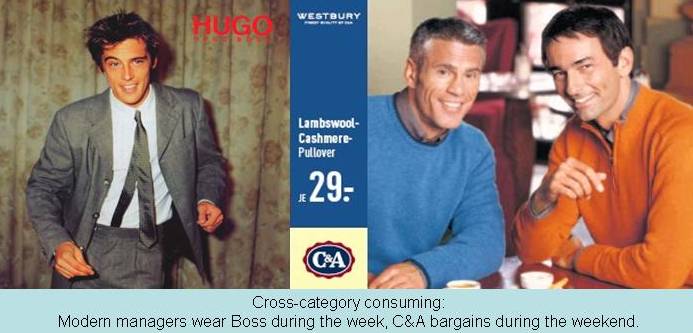
Standard marketing tools were the result of processes and practices developed in traditional consumer goods companies in the 50’s and 60’s. Their marketing departments invested in research looking for demographic, sociographic even psychographic profiles of their customers followed by bombarding the potential clients through traditional advertising media. The involvement of the traditional marketing department stopped once the product was sold. This is no longer valid. Consumers are not looking for “products” anymore, they are looking for a “customer experience”. They don’t hook their soul anymore to one “product category”, they have become extremely “cross-category”. For example: On Sunday the customer will go to his exclusive traditional bakery for bread and pastry. On Wednesday he goes to Aldi for sandwiches and hotdogs for a birthday party of the children. Or business people in Hugo Boss during the week are wearing C&A bargains in the weekend.

Consumers have gone the other way than their traditional suppliers. When Bain & Company surveyed 362 firms it found that 80 % believed they delivered a “superior consumer experience”. However when the customers were asked to rate the same suppliers only 8% of the suppliers seemed to deliver a superior experience. To close this gap suppliers should concentrate on developing the following three marketing D’s.

- Design an entire customer experience instead of just developing a product and pushing it into a market.
- Deliver the propositions of a customer experience at the lowest cost possible involving a cross departmental action plan.
- Develop a relationship with the client so you can follow up on the ever increasing shifts in customer attitude, to be able to deliver again, again and again.

Monday, May 01, 2006

John Kenneth Galbraight just died

Economist of importance. Became famous with his bestsellers "The Great Crash" (1929) and especially "The Affluent Society" (1958). One of the arguments in The Affluent Story was that the United States had become rich in consumer goods but poor in social services. Galbraight had the gift to explain complex economical theories in a simple language understandable for 'the men in the street'. He became professor at Harvard University. He often described himself as an "evangelical Keynesian" (Keynes advocated government spending to reduce unemployment) . Galbraight supported a much shorter work week, the women's liberation movement and the creation of an international council to help the victims of man-made disasters.
Some quotes:
(commenting on the Dow Jones Industrial Average's breaking the 6,500 mark he said:) "There is too much money chasing too little intelligence to manage it. It can't last."
(In an interview with the BBC:)
"There are some advantages of being right. You don't have to change your mind."

He died last Saturday 20-04-2006 at a hospital in Cambridge, Massachusetts. He was 97.
(www.johnkennethgalbraight.com)